
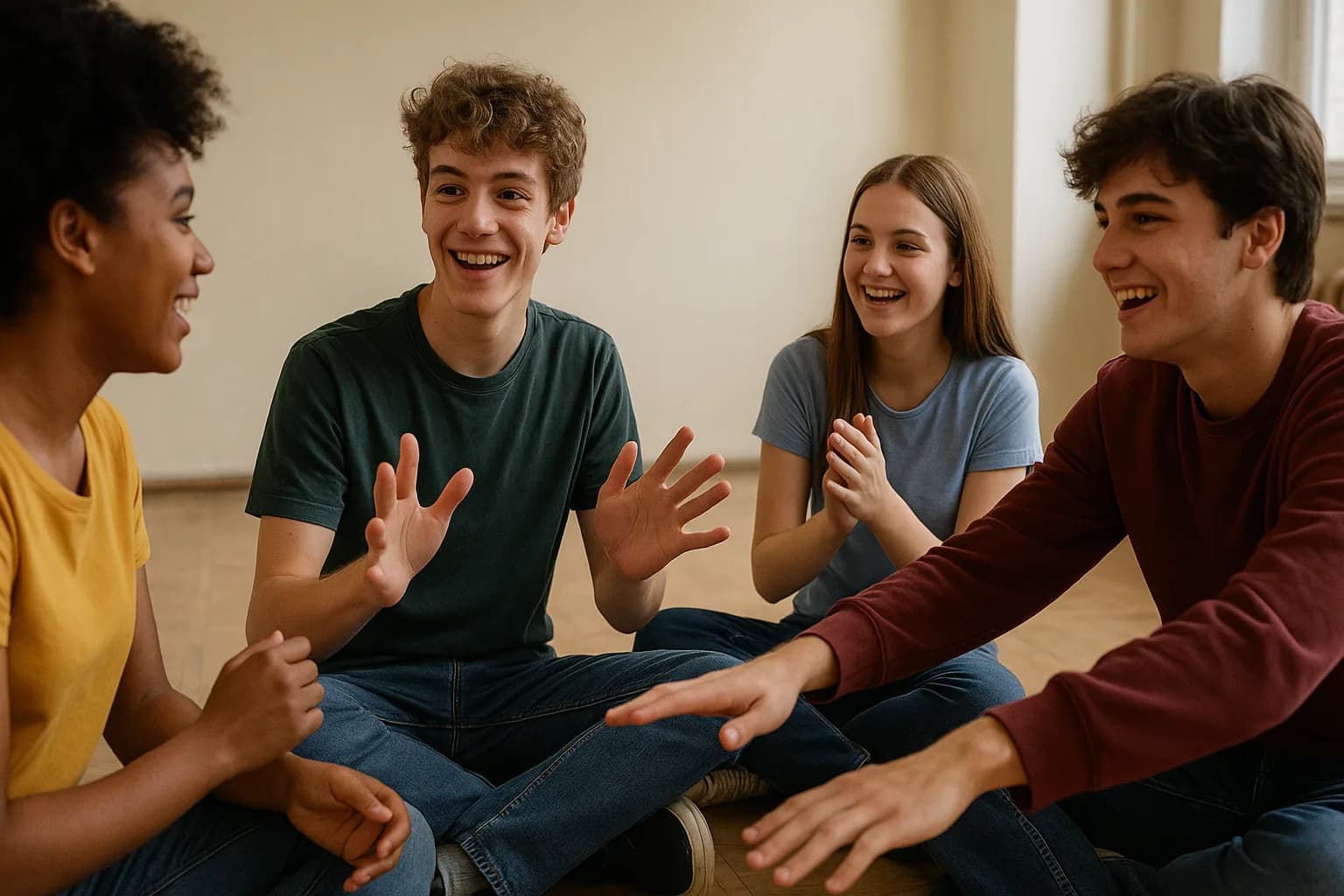
Everyone has arrived, the games cupboard is locked, and you need something to do. You can still run a good youth group game. These seven activities use conversation, imagination and cooperation rather than props.
The timings below are starting points, including a short explanation. You can run every game without phones, music, paper or prizes. Choose one that fits your space and the people who are actually there.
Before starting, demonstrate a round and make it clear that anyone can pass or watch. Keep exits clear and give people room to sit or stand comfortably. No one needs to be eliminated for the game to work.
1. Category chain
Group: 4–12. Time: 4–6 minutes. Space: A seated circle.
Choose a broad category, such as animals, foods or things you might take camping. Going around the circle, each person adds a different example. Start with a practice round: dog, koala, penguin.
If someone gets stuck, they can ask the group for a suggestion. Finish when you have gone around twice, then choose a new category. The challenge is to make the longest shared list you can, rather than catch someone out.
For a larger group, form smaller circles. Avoid specialist categories until you know everyone's interests; knowing a particular film series should never be the price of joining in.
2. Count together
Group: 5–15. Time: 3–5 minutes. Space: Seated or standing in place.
The group tries to count from one to ten. Anyone can say the next number, but there is no fixed order and nobody may say two numbers in a row. If two people speak at once, smile, reset and start again at one.
Give the group three attempts, then let them discuss what would help before trying again. Finish with a final attempt, whether or not they reach ten.
Keep eyes open and don't require silence between attempts. For a group that finds overlapping speech difficult, use a visible turn cue and enjoy building the sequence together instead.
3. Invisible parcel
Group: 4–15. Time: 4–6 minutes. Space: A circle with room for small gestures.
Mime holding an imaginary parcel. Show its size and weight, then offer it to the next person without touching them. They receive it, change what it seems to be, and pass it on. A tiny jewellery box might become a very heavy suitcase or a wobbly bowl of jelly.
After one circuit, invite volunteers to say what they thought they received. There are no wrong guesses. Play another round with a different starting object.
Players can describe the object instead of miming, and all movements can stay within comfortable reach.
4. Questions only cafe
Group: 4–12. Time: 5–7 minutes. Space: Seated pairs or trios.
Put people in pairs and give them a pretend situation: ordering lunch at a cafe. Their conversation must use questions. For example: “Is this seat free?” “Would you like the menu?” “Does it have sandwiches?”
Let pairs try for about a minute. If someone makes a statement, simply begin a new conversation. Switch to another setting, such as planning a picnic or visiting a library.
Give thinking time and allow a partner to suggest a question. Nobody needs to perform for the whole room.
5. Build an imaginary place
Group: 4–10. Time: 5–7 minutes. Space: A seated circle.
Choose a place to invent together, such as a campsite. The first person adds one detail: “Our campsite has a lake.” The next adds something else, and the group continues until everyone has contributed.
Go around again, this time explaining how visitors would use the things you invented. Perhaps the lake has a tiny ferry and the picnic shelter doubles as a library.
Keep previous contributions in the story rather than cancelling them. Players may ask someone to repeat a detail; remembering a long list isn't the test.
6. Same answer challenge
Group: 4–16. Time: 4–6 minutes. Space: Seated pairs.
Give each pair a category: a fruit, a breakfast food or something found at the beach. Without discussing it first, both partners say one answer on your count of three. If they match, they celebrate. If not, they get another attempt with the same category, using a different answer.
Try three attempts per category, then change partners if the group wants to. In a trio, aim for any two matching answers. Partners can take turns saying their choices if speaking simultaneously is difficult.
7. Soundtrack to a journey
Group: 4–12. Time: 4–6 minutes. Space: Seated together.
Tell a short, improvised journey: walking through town, catching a train and arriving at the seaside. Invite the group to supply quiet sound effects as you speak. One person might make footsteps while another provides a station announcement.
Pause after each scene and ask for a suggestion about where to go next. Finish after three locations. Keep the volume comfortable, avoid sudden shouts and let people contribute spoken descriptions instead of sounds.
Choose a game that serves your group
For a quiet start, try Category chain. For a shared challenge, use Count together. For a group that enjoys being creative, choose Invisible parcel or Build an imaginary place.
Games give leaders opportunities to practise patience and welcome. Notice who hasn't had a turn, learn names and make room for different ways of joining in. If you need more options for another week, explore Fervr's youth group games, mixers and icebreakers.